

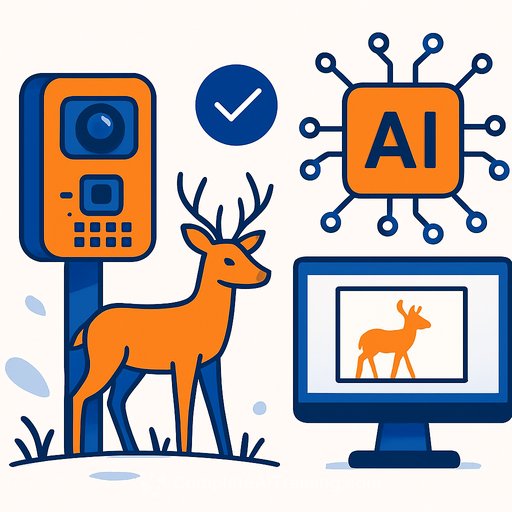
AI-powered camera trap analysis is revolutionizing wildlife conservation, enabling researchers to make rapid assessments of wildlife populations and habitats.
Revolutionizing Wildlife Conservation with AI-Powered Camera Trap Analysis
Wildlife conservation efforts have just received a significant boost, thanks to the innovative application of artificial intelligence (AI) in camera trap analysis. Researchers from Washington State University (WSU) and Google have developed an AI-powered tool that can sort through millions of images from wildlife camera traps in a matter of days, matching the accuracy of human experts an astonishing 85-90% of the time.
The Problem with Manual Analysis
Traditionally, analyzing images from wildlife camera traps has been a time-consuming and labor-intensive process. Conservationists and researchers have had to manually review thousands of images, often taking months to identify patterns and make informed decisions about species populations and habitats. This slow pace can hinder conservation efforts, as timely decisions are crucial for the survival of endangered species.
The AI Solution
The new AI-powered tool, developed through a collaboration between WSU and Google, uses machine learning algorithms to quickly and accurately analyze camera trap images. The AI system is trained on a large dataset of labeled images, allowing it to learn patterns and identify specific species, habitats, and behaviors. This enables researchers to make rapid assessments of wildlife populations and habitats, streamlining the conservation decision-making process.
Practical Applications
The implications of this technology are far-reaching. For example, conservationists can use the AI-powered tool to monitor the populations of endangered species like jaguars and grizzlies, enabling more effective conservation strategies. The tool can also be used to track the impact of climate change on wildlife habitats, helping researchers to develop targeted conservation efforts. Additionally, the AI system can be applied to other areas, such as monitoring human-wildlife conflict and identifying areas of high conservation value.
Career Opportunities
This innovative technology has significant implications for the job market, particularly for professionals in conservation, wildlife management, and data analysis. As the demand for AI-powered conservation tools grows, job seekers with expertise in machine learning, data analysis, and conservation biology will be in high demand. Whether you're a seasoned professional or just starting your career, this technology presents exciting opportunities for advancement and growth.
So, what does this mean for your career? Are you ready to join the forefront of AI-powered conservation efforts? Start exploring job opportunities today and be a part of the revolution in wildlife conservation!
